
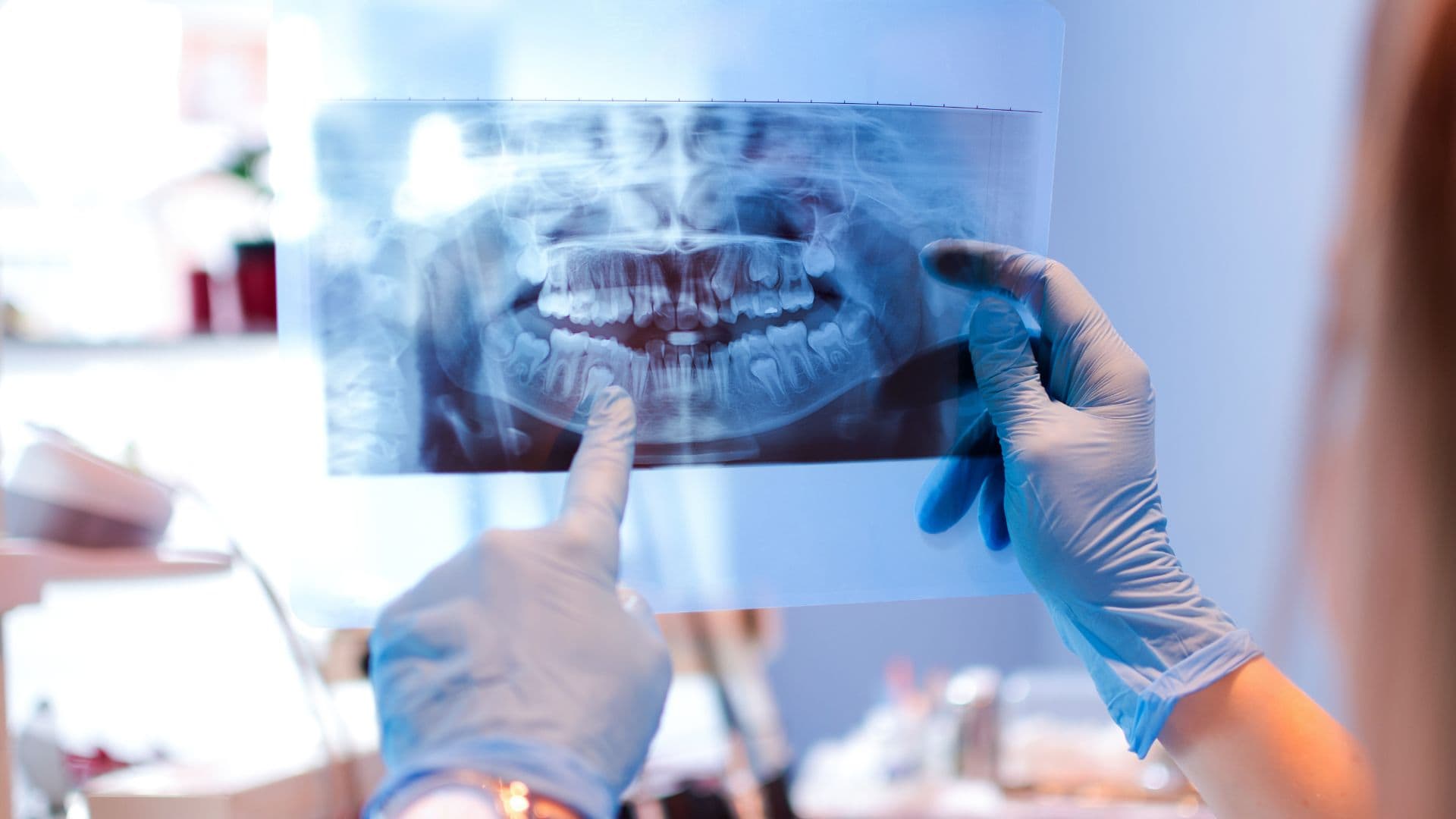
Dental radiographs, also known as dental x-rays, are typically used to help diagnose damaged and/or carious teeth as well as image pathology that is not visible to the naked eye. Often, a dental radiograph helps detect fractures or decay far before they even become noticeable to patients.
At Midland Bay Dental, dental radiography is a standard practice performed on patients daily. As a result of remarkable advances in dental radiograph technology, today’s X-rays are faster, safer, and more precise than ever, delivering clearer diagnostic insights with lower radiation exposure. In this post, we’ll walk you through the different types of dental radiographs, how often you may need them, and finally, what the latest Canadian guidelines say about keeping the process safe for you and your family.
What Are the Different Types of Dental X-Rays?
The Canadian Dental Association (CDA) supports an individualized approach to dental radiography. It generally recommends that imaging decisions be based on each patient’s specific clinical needs rather than on a routine schedule. Consequently, this ensures you receive only the truly necessary X-rays.
There are 4 main types of dental radiographs your dentist or dental hygienist may recommend:
- Bitewing Radiography. As the name implies, you bite on a special holder for this dental radiograph to be taken, one of the most common X-rays dentists use. Bitewings are very helpful for checking cavities between teeth and tracking gum disease. The CDA advises that the choice of radiograph type should always be guided by clinical judgment, the patient’s oral health history, and the specific area of concern.
- Periapical Radiography. To understand this X-ray, think apex. Periapical x-rays show what is happening at the meeting point of the tooth and the bone. This is useful when teeth are hurting or when evaluating and performing root canals. In line with CDA guidance, intraoral 2D radiographs are the recommended starting point for most evaluations, with advanced 3D imaging considered only when standard X-rays cannot provide sufficient diagnostic information.
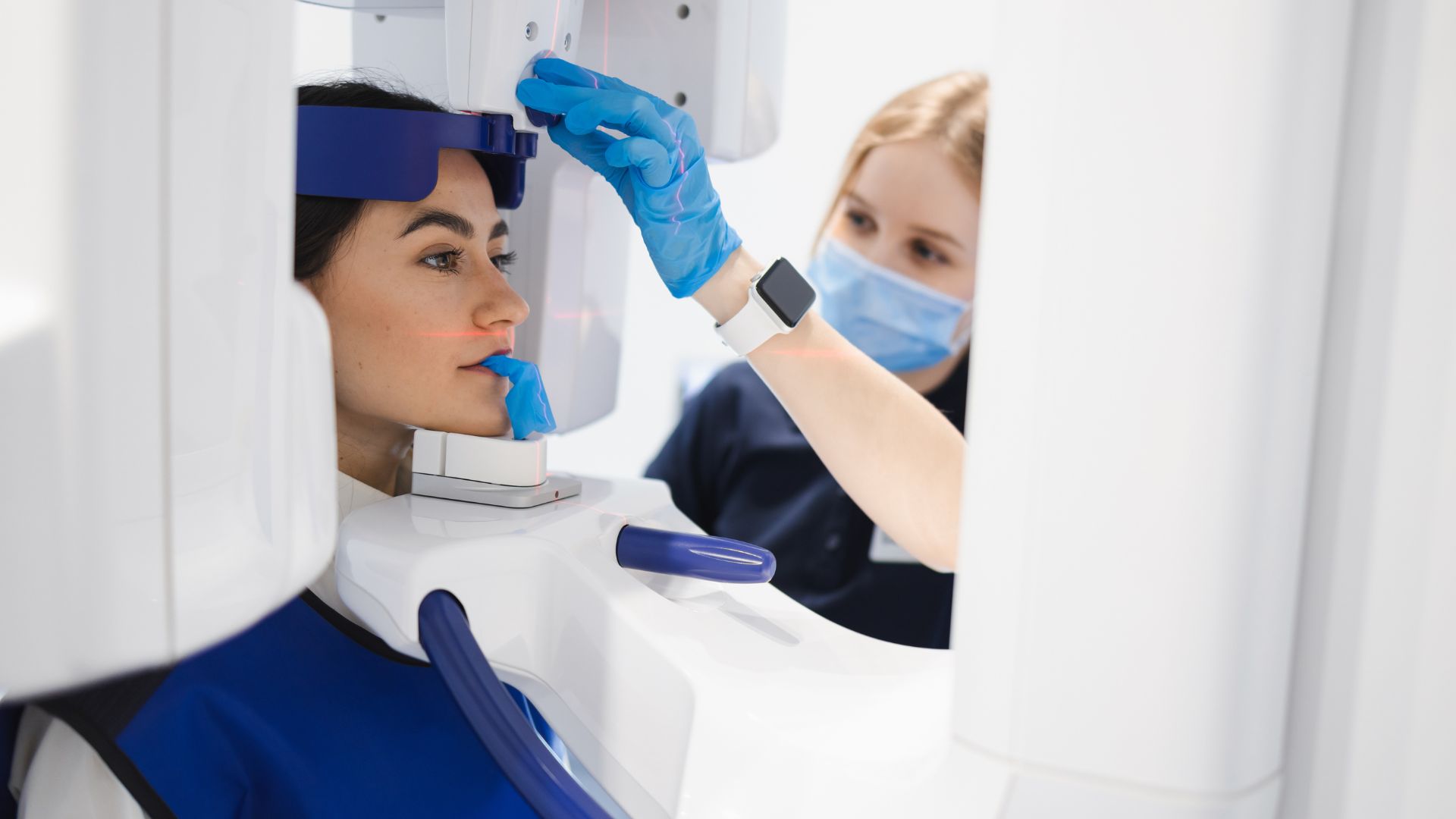
- Panoramic Radiography. This type of dental x-ray has a machine rotate around your head, allowing your dental professional to check wisdom teeth, plan for implants, or investigate jaw problems. Panoramic x-rays are also helpful for orthodontists tracking a child’s developing dentition. Modern panoramic systems are now fully digital, offering enhanced image quality with significantly reduced radiation.
- Occlusal Radiography. Sometimes called “sandwich radiography,” this X-ray examines the upper and lower jaws, palate, and floor of the mouth. It is rarely used since the pathology it detects is rare to begin with.
The Role of AI & Digital Technology in Modern Dental Radiology
Dental radiology has significantly advanced in recent years. Technology is now smarter, faster, and more precise, making it easier for dentists to diagnose issues early, reduce guesswork, and treat patients with greater accuracy. Key developments include:
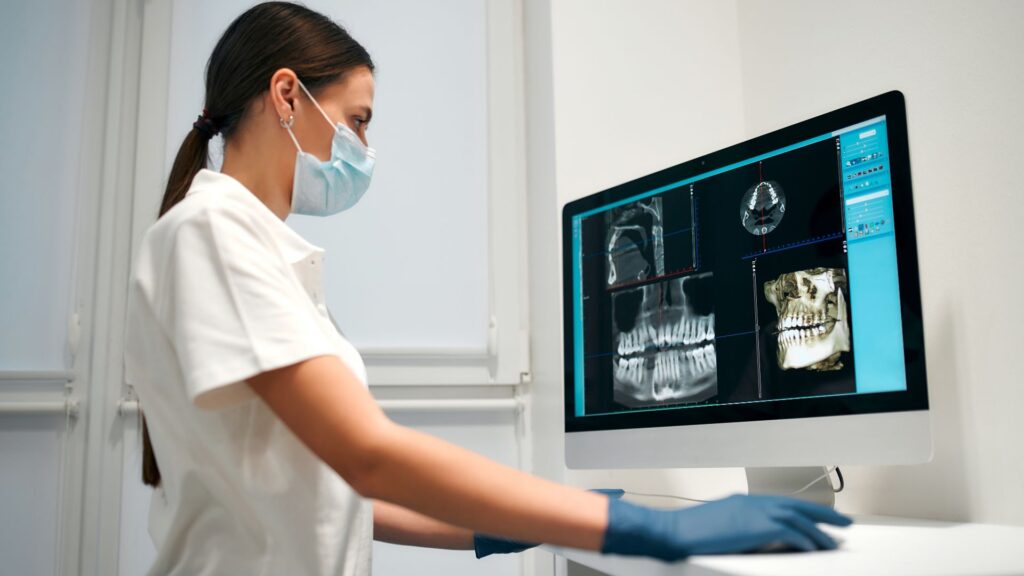
- Artificial Intelligence (AI). AI helps reduce errors and speeds up decision-making. In fact, recent studies show AI systems can match, and in some cases outperform experts in analyzing CBCT scans, with over 90% diagnostic accuracy.
- 3D Imaging (CBCT). Dental X-ray technology has come a long way. Where older 2D images could sometimes overlap or distort, modern 3D scanning now gives dentists a much clearer, more detailed picture of your teeth, roots, and jaw. This makes it easier to spot problems and plan treatment accurately.
Is Dental Radiography Safe?
Yes, dental radiography is safe. Health Canada confirms the radiation dose is low for each exposure. As such, the risk of harm from dental X-rays is generally low. In fact, the radiation dose from a dental X-ray procedure is low compared to other medical imaging modalities. It’s lower than the annual dose received from natural background radiation. Key safety principles Canadian dental professionals follow include:
- ALARA Principle. The Canadian Dental Association guidelines aim to ensure that dental offices comply with the ALARA (As Low As Reasonably Achievable) principle, keeping patient radiation exposure as low as possible given current accepted radiological practice.
- Digital equipment & beam restriction. Modern digital X-ray equipment is designed to capture clear, accurate images using the lowest radiation dose possible.
How Often Should You Get Dental X-Rays?
Generally, it depends on your individual oral health needs. The Canadian Dental Association and Health Canada’s Safety Code 30 indicate that a dental x-ray should be performed only for obtaining diagnostic information, and that a clinical exam should always come first. As a general guide:
- Healthy adults with no recent issues: X-rays may not be needed at every visit
- Recently diagnosed conditions: more frequent monitoring may be required to track progression
- New patients: a baseline set of dental radiographs is typically recommended
- Children & teens: may need X-rays more often as teeth and jaws are still developing
Regular dental radiographs remain important for catching cavities, bone loss, gum disease, and cysts before they become bigger problems.
As a patient, you have the right to ask questions. The team at Midland Bay Dental is here to provide you with answers. Your dentist will always explain why a dental radiograph has been recommended and walk you through every step of the process.
Dental Radiography at Midland Bay Dental
At Midland Bay Dental, we are a family-friendly dental office handling everything, in particular, from general dentistry and oral hygiene to preventative care. We use modern digital radiography equipment to ensure you receive the clearest images possible with the lowest radiation exposure.
If something doesn’t feel right, don’t wait – book an appointment sooner rather than later. Our team will assess your needs and explain your options. We help you feel fully informed and supported throughout the entire process.
To learn more about our dental radiography services, call us at (705) 526-6441 or book an appointment online.
Follow us on Facebook.