

Jaw pain or swelling in the back of your mouth can have you start wondering if wisdom teeth removal is in your future. These third molars have a reputation for causing trouble, but not everyone requires extraction. Here’s what to know about when they show up and how to tell if extraction is the right call for you.
When Do Wisdom Teeth Grow In?
Most people start noticing their wisdom teeth sometime between the ages of 17 and 25, which is why they earned the nickname “wisdom” teeth in the first place. They’re the last set of molars to develop, coming in behind the second molars at the very back of your mouth.
That said, timing varies quite a bit from person to person. Some people feel them coming in as early as their mid-teens, while others don’t notice anything until their late twenties. A few people never develop wisdom teeth at all, and that’s completely normal, too.
The tricky part is that by the time wisdom teeth are ready to erupt, your jaw has usually finished growing. There often just isn’t enough room left for a fourth set of molars, which is where a lot of the common problems begin.

Signs Your Wisdom Teeth Are Coming In
Your body tends to give you plenty of warning when something’s happening back there. Common signs include:
- Soreness or tenderness at the back of the gums
- Mild swelling or redness near the jaw
- A dull ache that comes and goes
- Difficulty opening your mouth fully
- Slight shifting or crowding in nearby teeth
If these symptoms are mild and your teeth have room to come in properly, you may not need to do anything beyond monitoring them. However, when space is tight, things can get more complicated.
What Are Impacted Wisdom Teeth?
This is where things get more serious. Impacted wisdom teeth are the third molars that can’t fully emerge or grow in at the correct angle because there isn’t enough space in the jaw. Instead of coming in straight, the tooth can end up sideways, angled toward the neighbouring molar, or stuck partially under the gumline.
Dentists typically describe impaction in two ways: by angle (mesial, vertical, horizontal, or distal) and by depth (soft tissue, partial bony, or full bony). A tooth might be classified as both, for example, a horizontally impacted tooth that’s also fully encased in bone, which helps determine how complex the extraction will be.
Impacted wisdom teeth aren’t just uncomfortable; they can also lead to bigger issues over time, including:
- Infection or gum disease around the impacted tooth
- Damage to neighbouring teeth or their roots
- Cysts forming around the impacted tooth
- Persistent bad breath or an unpleasant taste
- Ongoing pain that radiates to the ear or jaw
Impacted teeth are partially or fully trapped under the gum. This makes them harder to clean properly and raises the risk of decay and infection in that area.
Do You Actually Need Wisdom Teeth Removal?
Not every wisdom tooth needs to come out. If yours have grown in fully, sit in a healthy position, and don’t cause pain or crowding, your dentist may simply recommend monitoring them at your regular checkups.
However, extraction is usually recommended when:
- The tooth is impacted or growing at an angle
- There’s recurring pain, swelling, or infection
- The tooth is contributing to crowding or bite issues
- Cleaning around the tooth is consistently difficult
- A cyst or other complication has developed
The best way to know for sure is through a dental exam paired with X-rays. These reveal exactly how your wisdom teeth are positioned beneath the gumline. These problems aren’t always obvious just by looking or feeling around. Our team at Midland Bay Dental checks for them closely during your routine visits.
What to Expect from the Extraction Process
Wisdom teeth removal is one of the most common dental procedures available. Knowing what actually happens at each stage can make the whole thing feel a lot less intimidating.
It usually starts with a consultation and a set of dental X-rays. These images are essential, since they let your dentist see the exact position, angle, and depth of the wisdom tooth, along with its relationship to nearby nerves, roots, and the jawbone. This is especially important for impacted wisdom teeth, where the tooth may be hidden below the gumline and impossible to assess visually.
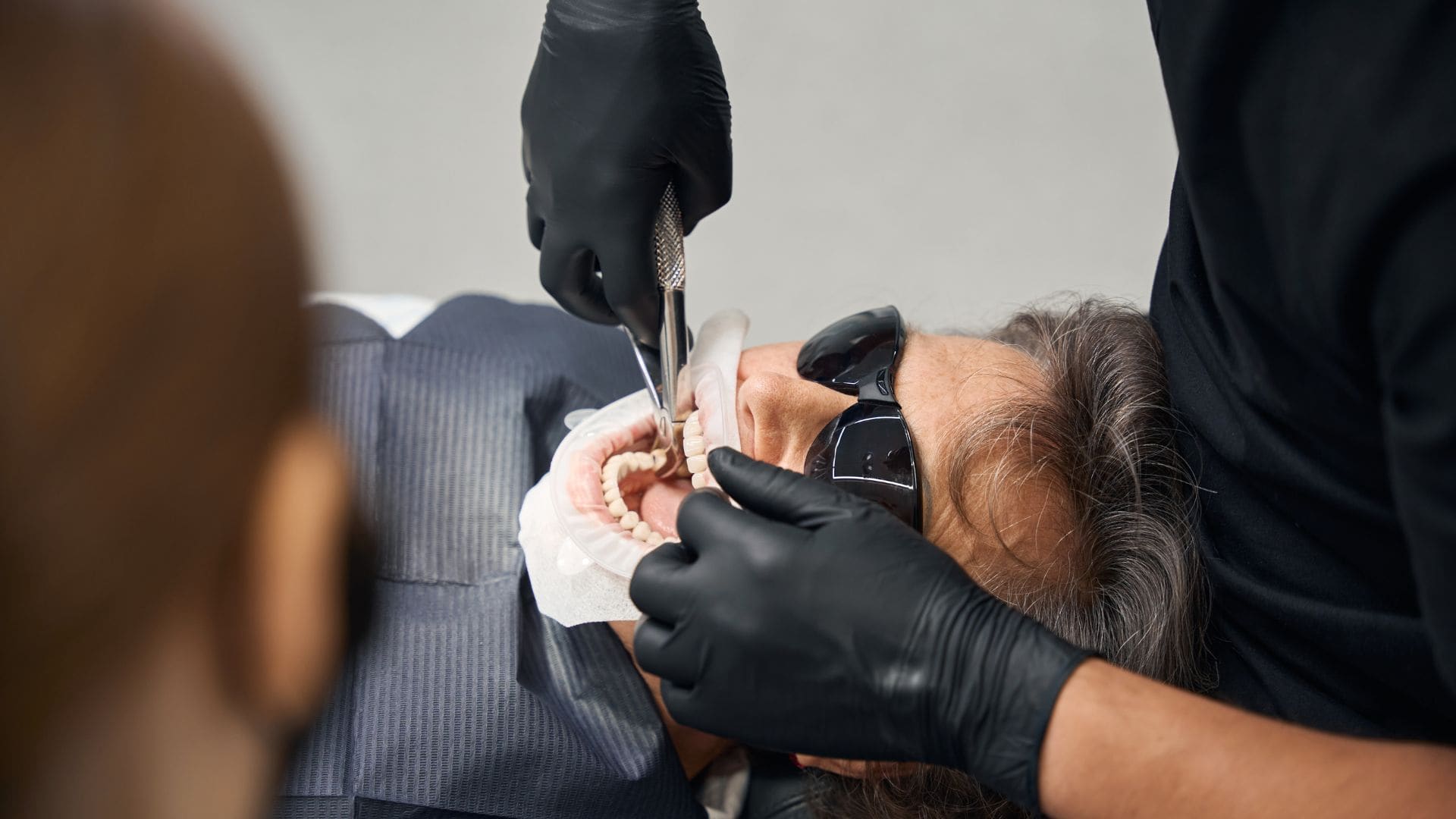
Once the X-rays are reviewed, your dentist will walk you through the plan for the extraction, including what type of anesthetic or sedation makes sense for your situation. Straightforward extractions, where the tooth has fully erupted, are often done using a local anesthetic right in the dental office. More complex cases, such as impacted teeth or teeth with unusual root shapes, may need a small incision in the gum tissue to access the tooth. In some cases, the tooth is also gently sectioned into smaller pieces for easier removal.
The procedure itself is typically quick, often wrapping up within 30 to 60 minutes, depending on the number of teeth being removed and their complexity. Afterward, you’ll be given specific instructions to follow over the next several days to support healing.
Aftercare Following Wisdom Teeth Removal
Recovery usually takes about a week, though everyone heals a little differently. Some swelling, tenderness, and mild bruising around the jaw are completely normal in the first few days.
A few things that help support a smoother recovery:
- Stick to soft foods like soup, yogurt, and mashed potatoes for the first several days
- Avoid using straws, since suction can dislodge the healing blood clot
- Apply a cold compress to the outside of the jaw to help with swelling
- Rest and avoid strenuous activity for at least a couple of days
- Gently rinse with warm salt water starting the day after surgery
- Avoid smoking, which can slow healing and increase the risk of complications
- Take any prescribed or recommended pain medication as directed
Watch for signs that might need follow-up attention. These are persistent bleeding, fever, or worsening pain after the first few days. Most people bounce back to normal within a week, though it can take a bit longer for the gum tissue to heal underneath fully.
Ready to Get Checked Out?
Wisdom teeth don’t follow a strict schedule, and whether they need to come out really depends on your individual mouth and jaw structure. If you’re noticing soreness in the back of your mouth or it’s just been a while since your last checkup, it’s worth getting a dental exam before small issues turn into bigger ones.
If you’re in the Midland area and have questions about your wisdom teeth, book a visit with our office. Let’s figure out the right approach together. Whether it’s simple monitoring or a straightforward extraction plan, the team at Midland Bay Dental will make sure your wisdom teeth are assessed properly.
Call us at (705) 526-6441 or book an appointment online.
Follow us on Facebook.